
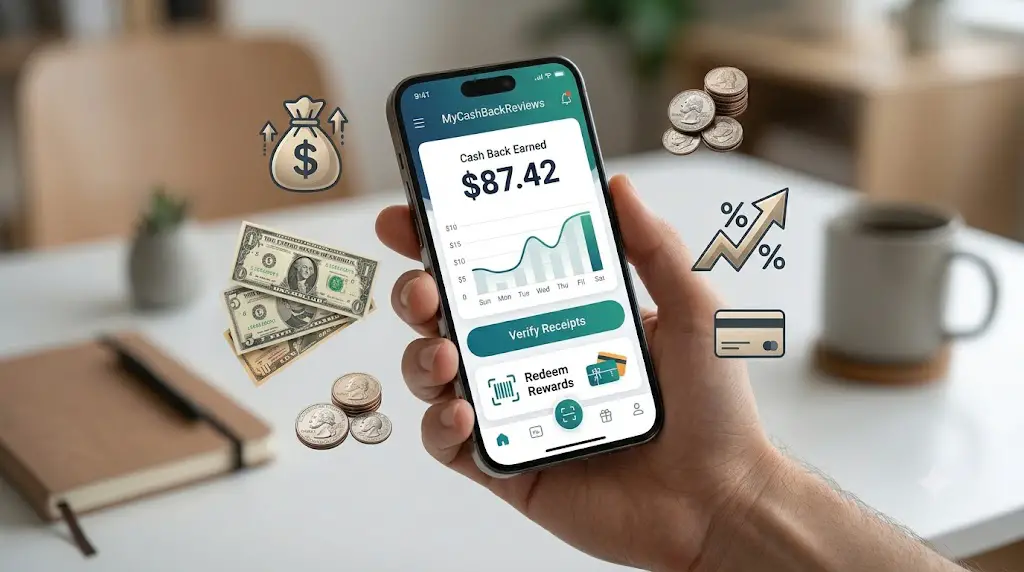
Cash back vs cashback is one thing people find online to make sure they understand it correctly. The two words cash back and cashback can be confusing and they are used interchangeably. We will learn what is the difference between the two with examples.
Transparency Note: My Cash Back Reviews is an independent site. I personally research and review growth tools to help creators understand the risks and benefits of various services. This post contains affiliate links; if you use them to sign up, I may earn a small commission at no additional cost to you, which helps support this site.
Check Out The Best Cashback Apps for Online Shopping, Dining, and Travel
What is cash back?
Cash back is a type of rebate that consumers can earn when they make purchases with a credit or debit card. Cash back is typically offered as a percentage of the purchase price, and it can be redeemed for cash, gift cards, or other rewards.
What is in-store cash back?
In-store cash back is a type of cash back that is earned when consumers make purchases at participating merchants. In-store cash back is typically offered as a percentage of the purchase price, and it can be redeemed at the time of purchase or later.
What is online cash back?
Online cash back is a type of cash back that is earned when consumers make purchases through participating online retailers. Online cash back is typically offered as a percentage of the purchase price, and it can be redeemed at the time of purchase or later.
What are the benefits of cash back?
There are many benefits to using cash back, including:
- Saving money:** Cash back can help you save money on your everyday purchases.
- Earning rewards:** Cash back can be redeemed for cash, gift cards, or other rewards.
- Making it easy to save:** Cash back is a convenient way to save money, and it can be automatically deposited into your bank account.
Learn more on how cashback works in my post “Demystifying Cash Back Apps: How They Work and How You Can Win Big on Everyday Purchases“
What are the drawbacks of cash back?
There are a few drawbacks to using cash back, including:
- Some merchants have a minimum purchase requirement:** Some merchants require you to make a minimum purchase to earn cash back.
- Cash back is not instant:** Cash back can take a few days or even weeks to be deposited into your bank account.
- Some cash back programs have fees:** Some cash back programs charge a fee to join or to earn cash back.
Cash Back Vs Cashback
Cash back is money you can request at the check-out at a store like Walmart and pay using your debit card. It is much like an ATM cash back except you are getting cash from a real person. This cashback still exists although you can use an ATM to get the same cash.
One advantage of getting cash back at a retail store during check-out is that you can request your own denomination such as $1, $5, $10, $20, etc, which is not offered/available at some banks’ ATMs.
Cashback means the points or the money/cash that you earn when you a cashback app like Fetch Rewards. You can also earn this cashback when you use a credit card. Some banks offer credit cards which when you use, will get you cashback points or the cashback as real money.
Can you do cashback with a credit card?
No, you cannot do cashback with a credit card. Here is the reason why. The credit card companies do not give you cash back at stores etc. But the only way you can get cash is at the ATM.
The Organic Growth Workflow: My Personal Strategy
Using services like Viewsta can be a starting point, but they are not a substitute for a real content strategy. Here is the workflow I recommend to ensure your channel grows in a way that YouTube’s algorithm actually likes:
- The “Primary” Focus: I always prioritize my own organic content. I use external tools only to get a “head start” on initial visibility, then I spend 90% of my time optimizing thumbnails, writing strong titles, and engaging with my actual community in the comments.
- The “30-Day” Rule: Before investing in any growth tool, I track my channel metrics for 30 days without it. This gives me a “baseline” to compare against. If the tool isn’t bringing in meaningful engagement (likes/comments, not just views), I stop using it.
- Algorithm-Friendly Engagement: I avoid tools that offer “bot-like” activity. I only use services that prioritize real-world exposure, as YouTube’s system is extremely good at flagging artificial spikes in engagement, which can penalize your channel’s long-term reach.
Conclusion on cashback vs cash back
Words sometimes sound the same and they can be confusing. One trick to remember the difference is to see the word itself. If it is written as one word “cashback”, it means they are talking about the cashback points or the money that is obtained from using an app or a credit card.
Hope this post helped you understand the difference between cash back and cashback.
Common Questions
- Q: Is Viewsta safe for my YouTube channel?
- A: Using any third-party tool carries some risk. Stick to reputable services and always test on a small, secondary project before applying them to your main brand.
- Q: Can this service get me monetized?
- A: YouTube’s monetization requirements (the “Partner Program”) are very strict. They specifically require authentic engagement. Using shortcuts to hit these numbers can lead to a rejection during the manual review process.
- Q: What is the best way to get real subscribers?
- A: Consistency, high-quality audio, and a clear “hook” in your first 30 seconds are the only proven ways to build a long-term, loyal audience.