
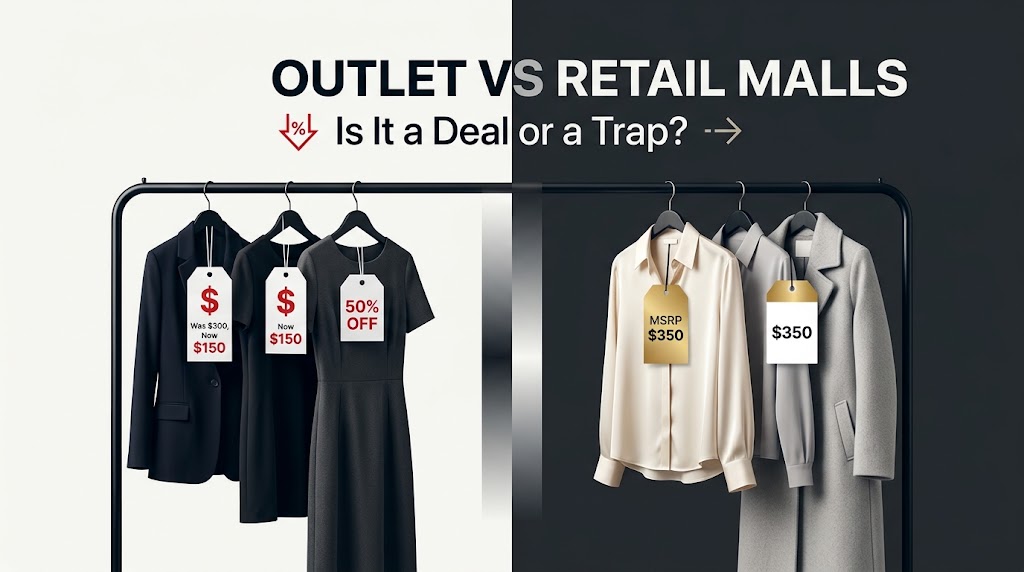
You pull into the outlet mall on a Saturday morning, picturing racks stuffed with high-end designer overstock. You know, that $300 jacket marked down to fifty bucks because the regular mall couldn’t sell it. Are factory stores cheaper than mainline retail, or are we all falling for a clever marketing trick?
Well, in my experience, walking out of those stores usually leaves you wondering why the fabric feels thin or why the zipper sticks. As it turns out, you aren’t imagining things. A major retail investigation into 40 popular apparel and home brands uncovered a surprising reality: 80 to 85 percent of the clothes and goods sitting in outlet stores were never meant for a regular mall.
They aren’t old inventory or minor “seconds”. They’re manufactured specifically for the discount channel.
1. What Are Factory Stores Actually Selling?
Most of us assume outlet malls act as giant clearance bins for unsold retail stock. But retail experts point out that brands use these off-line locations as a completely separate distribution pipeline.
To keep up with our demand for low prices, brands scale down the manufacturing:
- Your regular mall store uses heavier hardware, intricate stitching, and 100 percent natural fibers.
- The factory store often relies on simpler styling and synthetic-fiber blends to hit a cheaper price point.
Think of it like buying name-brand cereal at the dollar store—it looks identical on the shelf, but maybe the ingredients are just a little bit lighter. If you’re trying to outsmart retail traps and curb unnecessary spending, you might want to look into how to stop impulse buying with the 30-day rule before your next shopping trip.
2. Are Factory Stores Cheaper? (Yes, But Look Closer)
So, are factory stores cheaper? Yes, the price tags are lower. But remember, you aren’t getting a luxury garment for pennies; you’re getting an item designed from scratch to sell cheaply.
To make matters worse, many tags feature phrases like “Comparable Value” or “MSRP.” Honestly, I’m not entirely sure how these terms fly under the radar, especially since consumer protection advisories and class-action lawsuits have popped up against brands like J. Crew for using reference prices on items that were never actually sold in a regular retail store. For a deeper breakdown on how these discount frameworks operate, you can check out the official State of California consumer guide on outlet stores and pricing
.
If you’re looking for genuine ways to save money without playing guessing games at the mall, browsing through our guide on the best cash back apps is usually a much safer bet.
3. How to Spot the Difference
Since brands rarely put up signs admitting their outlet stock is unique, you have to do a little detective work. Here are a few tells:
- Check the labels: Some brands code their tags subtly. For instance, J. Crew Factory adds tiny diamond symbols under their logo, while Talbots outlets use white labels with three small dots.
- Inspect the hardware: Check the zippers and feel the fabric composition tags. If a blazer lacks a lining or leans heavily on polyester instead of wool, you’re looking at made-for-outlet merchandise.
- Look for true clearance: Stores like Nike Clearance or Pottery Barn Outlet are rare exceptions because they genuinely stock returned items, floor models, and actual mall overstock.
The Bottom Line
Outlet shopping isn’t a total scam, but it requires a shift in mindset. If you want casual, budget-friendly clothing, factory stores work fine. But if you want true, long-lasting durability, you might want to wait for seasonal sales at mainline stores or check out trusted resale platforms like Poshmark to score authentic mainline quality for less.